In short
Recovery starts when your cat comes home. How you care for them there plays an important role in how smoothly it goes. Cats often recover quietly and may hide discomfort, so watching closely at home matters. Your vet's discharge instructions usually cover pain medication, activity, the incision and sometimes food. Those instructions come first. Every surgery is different, and recovery times vary with the procedure and the cat.
How cats act after surgery
In the first 24 hours after anesthesia, these are common:
- Sleeping more than usual, for the rest of the day and sometimes the next day
- Eating less, or skipping a meal, in the first 24 hours. Many cats don't eat on the night they come home
- Seeming restless, confused or more vocal
- Wobbly walking for a few hours
- Urinating less or more often on the first day
- No bowel movement for 24–48 hours
- Hiding, or wanting less contact for a while
Some pain medications last up to 24 hours in cats. Your cat may not act "normal" for the first 12 to 24 hours.
After a spay or neuter, most cats are much like themselves again within about two weeks.
Why is my cat hiding after surgery?
- It's instinct. Cats hide signs of discomfort and illness, a trait from wild ancestors who needed to avoid becoming prey.
- Some hiding is expected. Hiding and less contact can happen during recovery, and should improve.
- Make hiding spots hard to reach. The ASPCA clinic suggests blocking the places your cat could hide, so you can watch the recovery.
- Give a quiet refuge instead. Let your cat rest in one quiet room, and keep other pets out of it.
- Hiding can also be a sign of pain. If your cat keeps hiding, or you see other signs below, tell your vet.
Signs of pain in cats
Cats often hide pain, and a quiet cat can still be in pain. That's why vets often prescribe pain medication even when a cat seems comfortable.
Know your cat's normal. Even a small change can be a sign of pain. Watch for:
- Sitting quietly, without meowing
- Hiding, withdrawing or seeking solitude
- Less appetite, or no interest in food. Changes in drinking
- Moving less, or hesitating to jump
- A hunched or tucked-up position instead of curled up when sleeping
- Squinting or narrowed eyes, or ears flattened against the head
- Pulling away, or reacting, when petted or touched
- Not grooming, or over-grooming one spot
- Licking, biting or rubbing one sore spot
- Using the litter box less, especially one with a high rim
- Sleeping more, or staying in one position for a long time
A short video or a few photos of what your cat does at home help your vet see what you see. Tell your vet about these signs, so the pain plan can be adjusted. Never give your cat human pain medication. It can be dangerous or fatal.
Call your vet right away if your cat:
- Has an incision that changes: more redness, swelling or heat, discharge, pus, a bad smell, or edges opening.
- Has cloudy, yellow or green drainage from the incision. This is especially concerning.
- Bleeds from the incision.
- Licks or chews the incision and you can't stop it, or can reach it with the cone on.
- Vomits, or has diarrhea.
- Refuses to eat or drink for more than 12 hours, or isn't eating when your vet expected.
- Strains to urinate, or can't urinate.
- Won't use the litter box.
- Hasn't defecated after 48 hours, or strains to.
- Has blood in the urine or stool. After a spay, a small amount of blood in the urine in the first 24 hours can happen; call if it lasts or starts later.
- Has pale gums or labored breathing.
- Is still very sleepy after 24 hours and hard to wake with gentle petting, or still wobbly or bumping into walls.
- Cries for more than an hour, or seems extremely stressed.
- Has pain that gets worse, or won't move.
- Has a bandage that slips, gets wet or smells, or the toes below it swell.
If you're unsure whether a change is normal, call your vet. That is always appropriate. If you can't reach your vet, go to the nearest emergency animal hospital.
What your vet sends home with you
Your vet decides the recovery plan. Here's what to expect:
- Written discharge instructions for pain medication, activity, the incision, and sometimes food and water.
- Pain medication. Give it exactly as directed. Skipping doses or stopping early can mean more discomfort and a slower recovery.
- Pain control during surgery, often several methods at once, such as nerve blocks.
- Stitches or staples. Some incisions have buried stitches that dissolve. Others have skin stitches or staples that only a veterinary professional should remove.
- Recheck visits to look at the incision, remove stitches, check how your cat is moving, and adjust the plan.
Sources: 1
Caring for your cat at home
A small, quiet recovery room
Cats should stay in a small, quiet space during recovery. It limits jumping, climbing and access to high surfaces.
- A bathroom, laundry room or small room works well. The ASPCA clinic suggests a quiet, dark room.
- Put fresh food, water and a clean litter box in the room.
- Block hiding spots, so you can see your cat.
- Keep other pets out of the room.
- Keep your cat indoors, clean, dry and warm.
Jumping, climbing and picking up your cat
Too much movement or jumping can stress the incision and slow healing.
- First 24 hours: no stairs, jumping or going outside alone.
- No jumping on or off furniture, and no play, for seven days after a spay or neuter.
- Can I pick up my cat? The ASPCA clinic suggests carrying small pets up and down stairs instead of letting them climb. Ask your vet how to lift your cat without pressing on the incision.
- Calm activity helps: food puzzles and quiet time together.
How long depends on the surgery, from no limits to weeks or months:
| Surgery | Rest the source describes |
|---|---|
| Spay or neuter, ASPCA clinic | 7–10 days of limited activity |
| Spay or neuter, Tufts spay/neuter clinic | a crate or small room for the first 3–5 days; no running, rough play or jumping while healing |
| Spay or neuter, Cornell | as quiet as possible for a week or so |
Your vet's instructions set the real dates. Activity usually increases in stages. Going too fast can slow recovery or cause injury.
The litter box after surgery
- A low-sided litter box can make getting in and out easier, depending on the procedure.
- Your vet may suggest non-clumping litter for a while, to keep the incision clean.
- After a male cat's neuter, litter dust can get into the surgery site and cause an infection. The ASPCA clinic asks owners to use shredded paper, a paper-based litter, or uncooked long-grain rice in the box for at least a week.
- If your cat won't use the box, call your vet.
What's normal, and what isn't:
- Urinating less or more often on the first day is common.
- Leaking urine can happen for a short time after some medications or procedures. It usually improves as anesthesia wears off.
- A delayed bowel movement for one or two days is common. Less food, pain medication and less activity all play a part.
- Soft stool can happen from stress, medication or a food change, and often settles.
- No stool softeners or other over-the-counter products your vet doesn't know about.
- Straining to urinate in the first 72 hours after a spay or neuter is a reason to call.
Write down each litter box visit, for urine and for stool. Your vet may ask.
Cone, recovery suit or onesie?
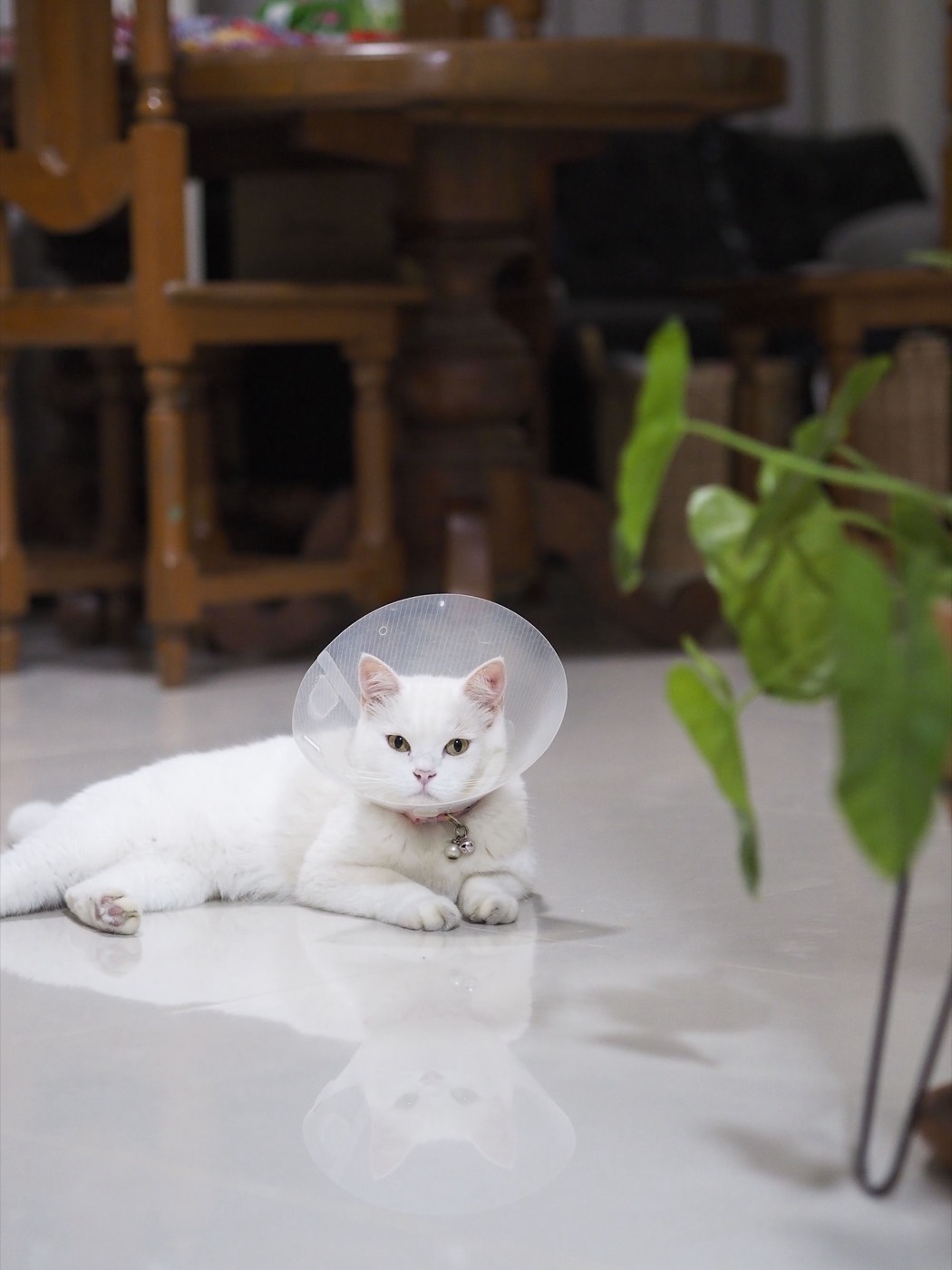
The cone (Elizabethan collar) stops your cat from licking or chewing the incision. Licking or chewing can cause infection, or make the incision come apart.
- How long does the cone stay on? As long as your vet says. After a spay or neuter, the ASPCA clinic asks for 7 to 10 days. Tufts asks for the cone at all times for the first week.
- Meals: keep it on unless you can watch your cat. Put it back on right after eating.
- If your cat can still reach the incision with the cone on, ask your vet about a larger one.
- Some vets cover the incision with a T-shirt, sock or bandage instead.
- Use a recovery suit (onesie) or surgical sleeve only if your vet advises it. The sources we read don't rank suits against cones, so ask your vet which one fits your cat's incision.
Even a cat who seems back to normal is still healing. Ask your vet for the date the cone can come off.
The incision
- Check it every day. After a spay or neuter, the ASPCA clinic asks owners to check twice a day.
- A healing incision is clean and dry, with the edges closed and little swelling.
- Mild redness or bruising can be normal in the first few days. A slightly firm area underneath can be normal in the first week.
- A little clear or blood-tinged fluid right after surgery can be normal. Ongoing discharge isn't.
- After a spay, the incision is a line in the middle of the belly.
- After a neuter, a male cat usually has no stitches. One or two small openings on the scrotum are normal. He may look as if he still has testicles; the swelling goes down over time.
- No ointments, sprays or cleaning unless your vet tells you to.
- Take a photo every day or so. Photos show healing and help your vet if you have a question.
Bathing
- No bathing until your vet says the incision has healed.
- After a spay or neuter, the ASPCA clinic says no baths for 10 days, and keep the incision dry: surgical glue can dissolve if wet.
Other cats and pets
- A cat coming home can smell different, and the other pets may fight with them. The ASPCA clinic advises keeping them in separate areas for a few days.
- Cats recognize each other by smell, so a cat who smells like the clinic may be rejected. Bring them back together gradually.
Can my cat eat and drink after surgery?
Yes, in most cases, but your vet's feeding instructions come first, including meal size, how often, and which food.
- Keep fresh water available unless your vet says otherwise.
- The first meal: after a spay or neuter, the ASPCA clinic offers about half the usual food and water about two hours after you get home, then the usual meals the next day. Tufts says a small meal the evening after surgery is fine if your cat is awake and bright.
- Keep the usual food. Avoid sudden changes unless your vet directs them.
- No human food or milk without your vet's OK.
- A smaller appetite in the first 24 hours is common. It can take two or three days to come back fully.
- Call your vet if your cat refuses to eat or drink for more than 12 hours, or vomits.
- Drinking less than usual is worth reporting.
- A feeding tube is used for some cats who can't eat enough. Your vet will show you how to use it.
Good nutrition matters. Enough calories and protein support healing. Ask your vet what to feed during recovery.
What to expect over time
- Most pets recover well with steady care at home and follow-up with the vet.
- Keep following the discharge instructions even when your cat seems better. Tissues are still healing.
- The plan may change at rechecks, including medications or activity.
- Recovery time depends on the surgery and the cat. Your vet will tell you what to expect.
Sources: 1
Free tools
Print them, fill them in, and bring them to your vet. Each one is a record for you and your vet; none of them tells you to change treatment.
- Discharge instructions sheet: blanks for your vet's answers on medications, food, litter, bathing, stitches and rechecks
- Recovery room and cone rules: what the sources say, with blanks for your vet's dates
- Recovery day log: incision check, ate, drank, litter box, hiding and energy, and meds given as prescribed
- Signs to call your vet: the list above, ready for the fridge
- Care handoff sheet: everything someone caring for your cat needs to know
- Questions for your vet: a short list to bring to the next visit
- Cat After Surgery Recovery Kit: all of the above in one PDF
When you need to travel
Recovery can last days or weeks, and plans don't always wait. Your cat still needs medications on time, the cone kept on, a quiet room, a clean litter box, and someone who checks the incision and knows which changes to report.
A VetterCare veterinary professional can follow your veterinarian's written discharge instructions at home. That means giving medications as prescribed, and keeping an eye on comfort, appetite, the litter box and the incision. Your cat stays home, in a calm and familiar place. You get photo updates while you're away, and you meet your veterinary professional in person before you leave.
Find care near you
- Dallas–Fort Worth, TX
- Tucson, AZ
- Scottsdale, AZ
- Mesa, AZ
- Gilbert, AZ
- Phoenix, AZ
- Glendale, AZ
- Prescott, AZ
- Fort Worth, TX
- Arlington, TX
Matched with a veterinary professional.
VetterCare veterinary professionals follow your veterinarian's instructions and do not replace veterinary care.
Find a vet or specialist
- Your own veterinarian, or the surgeon who operated, is your first call for anything about recovery.
- Board-certified veterinary surgeons can be found by location on the American College of Veterinary Surgeons' Find a Veterinary Surgeon directory.
- In an emergency, go to the nearest emergency animal hospital.
Questions to ask your vet
- 1How long does the cone stay on, and can it come off for meals? Is a recovery suit an option?
- 2What is my cat allowed to do, and for how long? When can my cat jump again?
- 3How should I pick up and carry my cat while the incision heals?
- 4What kind of litter and litter box should I use, and for how long?
- 5When and how much should my cat eat after we get home?
- 6Are the stitches dissolving, or do they need to come out? When?
- 7Which pain signs should I watch for, and what do I do if I see them?
- 8When should I worry if my cat hasn't urinated or defecated?
- 9When are our rechecks?
Sources
- American College of Veterinary Surgeons. "Postoperative Care After Surgery: What Animal Owners Should Expect." No date shown. https://www.acvs.org/small-animal/postoperative-care-after-surgery-what-animal-owners-should-expect/
- Texas A&M College of Veterinary Medicine & Biomedical Sciences, Pet Talk. "Confidently Caring For Pets After Surgery" (Dr. Jacqueline Davidson). Jul 7, 2022. https://vetmed.tamu.edu/news/pet-talk/pets-after-surgery/
- ASPCA spay/neuter clinic. "Postoperative Care Instructions" (client handout, marked CM 09.2023). https://www.aspca.org/sites/default/files/9.2023_en_caring_for_your_pet_after_surgery.pdf
- American Animal Hospital Association (AAHA). "What Can I Expect When My Pet Needs Anesthesia?" Jun 18, 2019. https://www.aaha.org/resources/anesthesia-for-dogs-and-cats/
- Cornell University College of Veterinary Medicine, Cornell Feline Health Center. "Spaying and Neutering." No date shown. https://www.vet.cornell.edu/departments-centers-and-institutes/cornell-feline-health-center/health-information/feline-health-topics/spaying-and-neutering
- American Association of Feline Practitioners, Cat Friendly Homes. "How Do I Know If My Cat Is In Pain?" No date shown. https://catfriendly.com/keep-your-cat-healthy/know-cat-pain/
- ASPCA Spay and Neuter Operations (Los Angeles). "Caring for Your Cat or Dog After Surgery" (client handout). Updated Mar 3, 2015. https://www.aspca.org/sites/default/files/post-discharge-instructions-la.pdf
- The Ohio State University College of Veterinary Medicine, Indoor Pet Initiative. "The Veterinarian." No date shown. https://indoorpet.osu.edu/node/472
- Roman N. "Recognizing and Assessing Pain in Animals." Merck Veterinary Manual. Full review and last update Sep 2025. https://www.merckvetmanual.com/special-pet-topics/pain-management/recognizing-and-assessing-pain-in-animals
- Texas A&M College of Veterinary Medicine & Biomedical Sciences, Pet Talk. "Detecting the Subtle Signs of Pain in Pets" (Dr. Daniel Eckman). Jul 5, 2019. https://vetmed.tamu.edu/news/pet-talk/detecting-the-subtle-signs-of-pain/
- Devitt L. "Signs of Pain in Cats: How to Tell If Your Cat Is Hurting." American Animal Hospital Association (AAHA). Feb 27, 2026. https://www.aaha.org/resources/recognizing-pain-in-cats/
- Texas A&M College of Veterinary Medicine & Biomedical Sciences, Pet Talk. "When is your cat hiding illness or injury?" (Dr. Stacy Eckman). Sep 14, 2017. https://vetmed.tamu.edu/news/pet-talk/when-is-your-cat-hiding-illness-or-injury/
- ASPCA Spay/Neuter Alliance. "After Surgery Instructions." No date shown. https://www.aspca.org/aspca-spay-neuter-alliance/after-surgery-instructions
- Texas A&M Veterinary Medical Teaching Hospital. "Orthopedics" (after-surgery home care instructions). No date shown. https://vetmed.tamu.edu/vethospital/small-animal/orthopedics/
- Tufts University Cummings School of Veterinary Medicine, Lerner Spay/Neuter Clinic. "Aftercare." No date shown. https://vet.tufts.edu/lerner-spay-neuter-clinic/appointments-client-info/aftercare
- American College of Veterinary Surgeons. "Find a Veterinary Surgeon." https://www.acvs.org/find-a-surgeon/
VetterCare gathers this information from the published sources listed above. It is general information, not veterinary advice, and doesn't replace an exam by your veterinarian. VetterCare veterinary professionals follow your veterinarian's instructions. If your pet is experiencing an emergency, contact your veterinarian or the nearest emergency animal hospital right away.